
Yoga for Chronic Back Pain: A Therapeutic Guide from the Himalayas
Quick Answer
Yoga for chronic back pain works by gently strengthening the core and spinal support muscles, releasing chronically tight muscles (especially in the lower back and hips), and correcting the postural habits that cause pain in the first place. A therapeutic sequence built around Cat-Cow, Sphinx Pose, Supta Baddha Konasana, and supported Bridge Pose, practiced consistently under proper guidance, can meaningfully reduce chronic back pain over 4-6 weeks.
Understanding Chronic Back Pain
Chronic back pain is one of the most common health complaints among adults in Australia, the UK, the USA, and Canada, largely driven by long hours at a desk, poor posture, weak core muscles, and high daily stress levels. Unlike an acute injury, chronic back pain persists for 12 weeks or longer and often becomes a cycle: pain leads to reduced movement, reduced movement leads to stiffness and weaker muscles, and weaker muscles lead to more pain.
This is exactly where yoga for chronic back pain differs from a quick fix. Rather than only stretching a tight muscle once, a therapeutic yoga approach retrains posture, breathing, and movement patterns over time — which is why yoga for back pain relief is increasingly recommended alongside, not instead of, conventional physiotherapy.
How Yoga Therapy Helps Chronic Back Pain
- Strengthens the deep core and spinal stabilizer muscles that protect the lower back
- Improves flexibility in the hips and hamstrings, which often reduces strain transferred to the lower spine
- Activates the parasympathetic nervous system through breathwork, lowering the muscle tension caused by chronic stress
- Builds body awareness so postural habits — slouching, uneven weight-bearing — are corrected in daily life, not just on the mat
This combination is why therapeutic yoga for back pain is used in integrative pain-management programs worldwide, and why Yogada’s own blog on yoga therapy versus physiotherapy has resonated with readers researching non-invasive back pain solutions.
Best Therapeutic Yoga Poses for Back Pain
1. Cat-Cow Pose (Marjaryasana-Bitilasana)

Gently mobilizes the entire spine and warms up the back before deeper work. Practice 8-10 slow rounds, synchronized with breath.
2. Sphinx Pose (Salamba Bhujangasana)

A gentle backbend on the forearms that strengthens the lower back without the strain of a full Cobra Pose. Hold for 5-8 breaths.
3. Supta Baddha Konasana (Reclining Bound Angle Pose)

A supported, restorative pose that releases tension in the hips and lower back. Use a bolster or cushion under each knee for comfort.
4. Supported Bridge Pose (Setu Bandhasana)
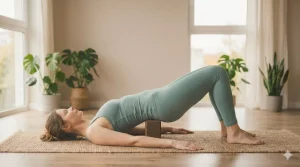
Strengthens the glutes and lower back while decompressing the spine. A block under the sacrum makes this pose accessible even for beginners with back pain.
5. Pawanmuktasana (Wind-Relieving Pose, one leg at a time)
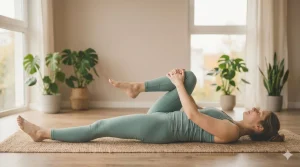
Releases tension in the lower back and sacroiliac joint. Avoid if you have a diagnosed disc herniation without a therapist’s guidance.
Caution: If chronic back pain is linked to a diagnosed disc herniation, spondylolisthesis, or recent surgery, these poses should only be practiced under the direct guidance of a qualified yoga therapist or doctor. Yoga for chronic back pain is a complementary approach, not a replacement for medical diagnosis.
The Ayurveda Connection: Why Back Pain Keeps Returning
In Ayurveda, chronic back pain is most often linked to an aggravated Vata dosha — the energy governing movement and the nervous system. When Vata is imbalanced through stress, irregular routines, or cold, dry conditions, the body holds tension in the lower back and joints. This is why a one-to-one Ayurveda consultation, alongside a therapeutic yoga for back pain routine, often produces more lasting results than yoga poses alone: the daily routine (Dinacharya), diet, and oil-based therapies (like Ayurvedic back massage) are adjusted specifically to pacify Vata.
A Sample Weekly Routine for Back Pain Relief
| Day | Focus |
| Mon / Wed / Fri | Cat-Cow, Sphinx Pose, Supported Bridge Pose — 20-25 minutes |
| Tue / Thu | Gentle walking + Pawanmuktasana + deep diaphragmatic breathing |
| Saturday | Restorative yoga: Supta Baddha Konasana, legs-up-the-wall, guided relaxation |
| Sunday | Rest or a gentle Ayurveda oil massage session |
Why Heal Chronic Back Pain in the Himalayas
Yogada in the Himalayas is the only AYUSH Wellness Village recognized by the Government of Uttarakhand in the Shivpuri area, on the banks of the Ganga near Rishikesh. For international visitors dealing with chronic back pain from years of desk work and travel, this setting offers something a home yoga practice cannot: a personalized Ayurveda doctor consultation, a distraction-free daily routine, and therapeutic yoga guided by experienced teachers, all within a wellness retreat designed around genuine recovery rather than a tourist itinerary.
- One-to-one Ayurveda consultation to identify the Vata imbalance behind your back pain
- Daily therapeutic yoga sessions supervised by experienced teachers, not generic drop-in classes
- Ayurvedic massage and Panchakarma add-ons available for deeper muscular release
- A slower pace of life on the Ganga that reduces the stress load contributing to muscle tension
Frequently Asked Questions
Can yoga really help with chronic back pain?
Yes. Multiple studies and clinical yoga therapy programs show that a consistent, well-guided yoga for chronic back pain practice reduces pain intensity and improves function, particularly for non-specific lower back pain caused by weak core muscles and poor posture.
What is the best yoga pose for lower back pain?
Cat-Cow Pose and Supported Bridge Pose are considered the safest starting points for most people with lower back pain, as they mobilize and strengthen the spine without deep flexion or twisting.
Is yoga safe for a herniated disc?
Gentle, guided yoga can be safe for a herniated disc, but poses involving forward folds or deep twists should be avoided or modified. Always consult a doctor or a qualified yoga therapist before starting.
How long does it take for yoga to relieve back pain?
Most people practicing therapeutic yoga for back pain consistently notice a reduction in stiffness within 2-3 weeks, with more significant relief after 6-8 weeks of regular practice.
Does Yogada offer a program specifically for back pain relief?
Yogada’s wellness retreats combine one-to-one Ayurveda consultation with therapeutic yoga sessions that can be tailored around chronic back pain, alongside optional Ayurvedic massage and Panchakarma therapies.
At a Glance
| Attribute | Detail |
| Condition | Chronic Back Pain (12+ weeks duration) |
| Primary Cause Addressed | Weak core, poor posture, Vata imbalance, chronic stress |
| Key Yoga Poses | Cat-Cow, Sphinx Pose, Supported Bridge, Supta Baddha Konasana |
| Recommended Frequency | 5-6 days per week, 20-30 minutes per session |
| Complementary Therapy | Ayurveda consultation, Ayurvedic massage, Panchakarma |
| Where to Practice | Yogada in the Himalayas, Shivpuri, near Rishikesh, Uttarakhand |
Medical Disclaimer (include on the published page): This article is for general wellness information only and is not a substitute for professional medical advice, diagnosis, or treatment. Readers with a diagnosed medical condition should consult a qualified doctor before starting any new yoga or exercise practice.

