
Yoga Therapy for Insomnia and Sleep Disorders: A Himalayan Approach to Better Sleep
Quick Answer
Yoga therapy for insomnia works by calming an overactive nervous system rather than forcing sleep directly. Restorative poses like Legs-Up-The-Wall and Supta Baddha Konasana, combined with slow Nadi Shodhana (alternate nostril) breathing and a guided Yoga Nidra practice, shift the body from a stress-dominant state into the parasympathetic state needed for deep, uninterrupted sleep — typically within 2-3 weeks of consistent evening practice.
Understanding Insomnia and Sleep Disorders
Insomnia — difficulty falling asleep, staying asleep, or waking unrefreshed — is one of the most common complaints among international travelers and professionals from Australia, the UK, the USA, and Canada, often driven by high-stress work cultures, excessive screen time, jet lag, and an overstimulated nervous system that never fully switches off. Unlike short-term sleeplessness after a stressful day, chronic insomnia lasting a month or more starts to affect mood, immunity, and even the ability to focus during the day.
This is where yoga therapy for insomnia offers something sleeping pills cannot: it addresses the nervous system dysregulation causing the sleeplessness, rather than only sedating the body for one night.
How Yoga Helps Insomnia and Sleep Disorders
- Shifts the nervous system from sympathetic (fight-or-flight) to parasympathetic (rest-and-digest) dominance
- Lowers cortisol levels through slow, controlled breathing practiced in the evening
- Releases physical tension held in the shoulders, jaw, and hips that keeps the body “alert” even when lying down
- Yoga Nidra specifically trains the brain to access the theta-wave state associated with the onset of deep sleep
Yogada’s existing readers researching yoga for insomnia are typically looking for a natural alternative to medication — a gap that a dedicated yoga therapy for insomnia guide, backed by real Ayurveda and Yoga Nidra expertise, is well positioned to fill.
Best Yoga Practices for Better Sleep
1. Legs-Up-The-Wall Pose (Viparita Karani)
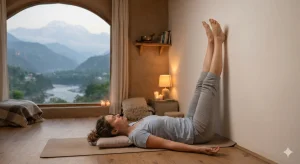
A deeply restorative inversion that calms the nervous system and reduces the racing thoughts that keep people awake. Hold for 5-10 minutes before bed.
2. Supta Baddha Konasana (Reclining Bound Angle Pose)
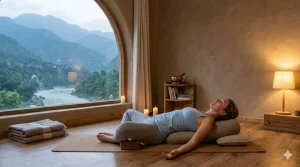
Opens the hips and chest while allowing full relaxation. Supported with cushions, this pose can be held for 8-10 minutes as part of a wind-down routine.
3. Nadi Shodhana (Alternate Nostril Breathing)

A balancing pranayama technique that calms the mind within a few minutes. Practice 5-7 rounds seated in bed before lying down.
4. Bhramari Pranayama (Humming Bee Breath)
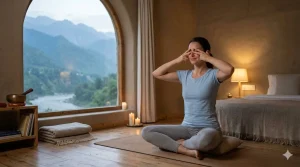
The vibration created by this breathing technique has an almost immediate calming effect on the mind, making it especially useful for racing thoughts at bedtime.
5. Yoga Nidra (Yogic Sleep)
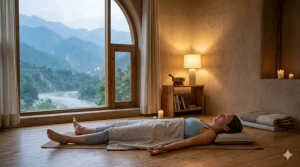
A guided 20-30 minute practice that brings the body into deep relaxation while remaining aware. Regular Yoga Nidra practice is one of the most researched yoga therapies for insomnia and chronic sleep disorders.
Caution: If insomnia is linked to a diagnosed sleep disorder such as sleep apnea, or to a broader anxiety or depressive condition, yoga therapy should complement — not replace — medical treatment. Consult a doctor for a proper diagnosis.
The Ayurveda Connection: Dinacharya and Sleep
Ayurveda treats disturbed sleep as a sign that daily rhythm (Dinacharya) has fallen out of sync with the body’s natural clock — often due to a Vata or Pitta imbalance from irregular schedules, excess screen time, or travel across time zones. A personalized Ayurveda consultation can identify which dosha is disturbing sleep and recommend specific adjustments: earlier dinner timing, a warm oil head massage (Shirodhara-style), and herbal support, alongside the evening yoga therapy routine, for more sustainable results than the poses alone.
A Sample Evening Routine for Better Sleep
| Time Before Bed | Practice |
| 60 minutes before | Switch off screens; herbal tea; light stretching |
| 30 minutes before | Supta Baddha Konasana + Legs-Up-The-Wall (10-15 min) |
| 15 minutes before | Nadi Shodhana or Bhramari Pranayama (5-7 rounds) |
| In bed | 20-minute guided Yoga Nidra practice |
Why Reset Your Sleep in the Himalayas
Yogada in the Himalayas sits on the banks of the Ganga in Shivpuri, near Rishikesh — a government-recognized AYUSH Wellness Village where the pace of life itself supports better sleep. For international visitors whose insomnia is rooted in overstimulation, screen time, and stress, a wellness retreat built around a natural sleep-wake rhythm, Ayurveda-guided evenings, and daily Yoga Nidra offers a reset that a hotel stay or a sleep app cannot replicate.
- Personalized Ayurveda consultation to identify the dosha imbalance behind disturbed sleep
- Daily guided Yoga Nidra and pranayama sessions led by experienced teachers
- A naturally quiet, low-stimulation environment beside the Ganga, away from city noise and screens
- Optional Ayurvedic head and body massage therapies to deepen relaxation
Frequently Asked Questions
Can yoga therapy actually cure insomnia?
Yoga therapy for insomnia doesn’t work like a sleeping pill, but consistent practice — especially Yoga Nidra and calming pranayama — retrains the nervous system to fall asleep more easily and stay asleep longer, with many practitioners reporting real improvement within 2-3 weeks.
What is the single best yoga pose for sleep?
Legs-Up-The-Wall Pose (Viparita Karani) is widely considered one of the most effective and accessible poses for calming the nervous system before bed.
What is Yoga Nidra and how is it different from sleep?
Yoga Nidra is a guided relaxation practice where the body rests deeply while the mind stays lightly aware, giving many of the restorative benefits of sleep and training the nervous system toward better natural sleep.
Is yoga for insomnia safe for people already taking sleep medication?
Yes, gentle yoga and breathing practices are generally safe alongside sleep medication, but any change to medication should only be made in consultation with a doctor.
Does Yogada offer a program focused on sleep and stress reset?
Yogada’s wellness retreats combine Ayurveda consultation, daily Yoga Nidra, and pranayama sessions that can be tailored around sleep and stress recovery for international guests.
At a Glance
| Attribute | Detail |
| Condition | Insomnia and chronic sleep disturbance |
| Primary Cause Addressed | Nervous system overstimulation, Vata/Pitta imbalance, stress |
| Key Practices | Legs-Up-The-Wall, Supta Baddha Konasana, Nadi Shodhana, Bhramari, Yoga Nidra |
| Recommended Frequency | Nightly, 20-40 minutes before bed |
| Complementary Therapy | Ayurveda consultation, Dinacharya adjustment, oil-based relaxation therapies |
| Where to Practice | Yogada in the Himalayas, Shivpuri, near Rishikesh, Uttarakhand |

